
F&B Strategy Consultants in Saudi Arabia for Global Projects
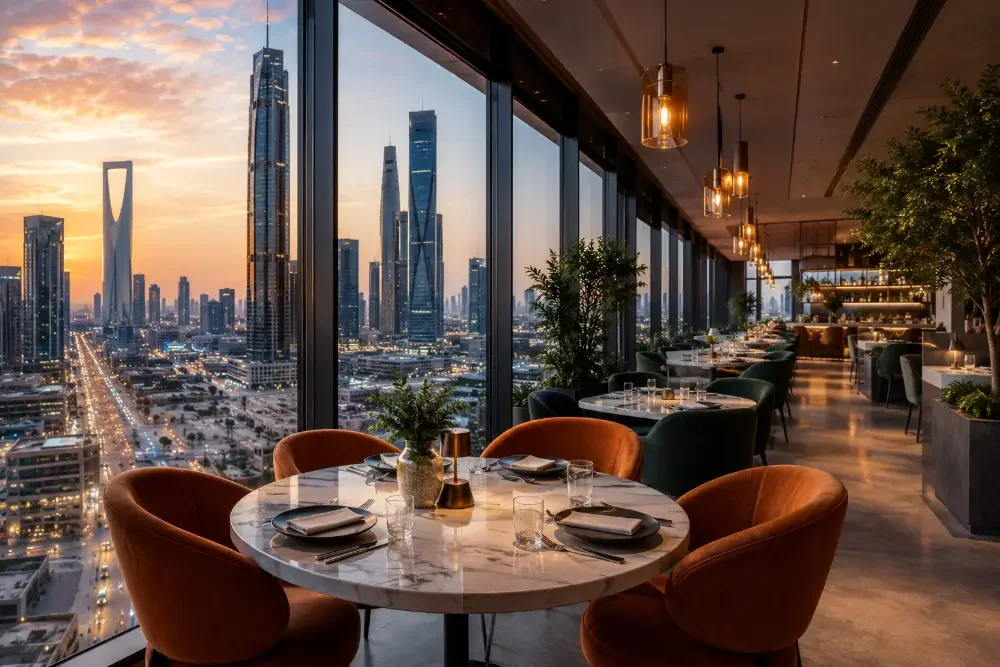
The most successful destinations in Saudi Arabia are not treating hospitality as an amenity. They are treating it as infrastructure.
Across projects such as Diriyah, Qiddiya, NEOM, The Red Sea and Jeddah Central, food and beverage is being asked to do much more than provide places to eat. Hospitality is expected to support tourism, activate public spaces, encourage longer visits, strengthen leasing outcomes and help shape how people experience an entire destination.
That shift is one reason developers, asset owners and project teams increasingly engage specialist F&B strategy consultants in Saudi Arabia during the earliest stages of planning. Decisions about food and beverage now sit alongside discussions about movement, public realm design, commercial positioning and visitor experience.
Future Food has explored this relationship between hospitality and placemaking extensively, particularly in its article on From Place to Performance: Hospitality Masterplanning, which highlights how hospitality can influence the success of an entire destination rather than simply occupy available tenancy space.
Why Hospitality Planning Is Becoming a Core Development Consideration
Large scale developments are expected to perform across multiple customer groups and multiple dayparts.
A destination may need to attract office workers during the week, residents in the evening, tourists throughout the year and visitors attending major events. Each audience interacts with hospitality differently.
A morning coffee venue serves a different purpose to a destination restaurant. Casual dining supports different customer behaviours to a food hall, rooftop venue or grab and go offer. Planning for these differences requires more than tenant selection. It requires understanding how people move through a place and how hospitality can support that movement.
In many projects, hospitality becomes one of the few asset classes that directly influences both customer experience and commercial performance. Well positioned venues encourage visitors to explore further, spend longer on site and engage with a broader range of experiences.
This principle sits at the heart of effective Food & Hospitality Strategy Development, where customer behaviour, commercial objectives and hospitality planning are aligned from the outset.
Why Early Decisions Have Long Term Consequences
Some of the most significant hospitality decisions are made before a single operator is approached.
At masterplanning stage, project teams still have flexibility around circulation, servicing, loading access, tenancy footprints and public realm interfaces. These decisions have a direct impact on operator interest and long term performance.
A common challenge across major developments is that hospitality operators are often introduced after key design decisions have already been made. By that point, servicing routes may be constrained, tenancy layouts may limit operational flexibility, and opportunities to create stronger connections between hospitality and public space may have been reduced.
The projects that typically attract the greatest operator interest are those where hospitality requirements have informed planning decisions early.
This is why many developers integrate Food & Hospitality Masterplanning into broader development planning rather than treating hospitality as a separate workstream.
F&B Strategy Consultants Saudi Arabia and Vision 2030
Vision 2030 has accelerated investment across tourism, entertainment, culture and mixed use development. As a result, hospitality is becoming increasingly important to destination identity.
Diriyah provides a useful example.
Rather than concentrating hospitality within a single dining precinct, food and beverage experiences are integrated throughout the visitor journey. Restaurants, cafés and gathering spaces encourage visitors to spend more time within the destination while supporting the broader cultural experience. Hospitality becomes part of how the precinct is experienced rather than a separate attraction.
The Red Sea development demonstrates a different planning principle. Hospitality must support tourism outcomes while responding to environmental considerations, visitor expectations and operational realities. In this context, food and beverage helps define the quality and character of the destination itself.
These projects illustrate why the role of F&B strategy consultants Saudi Arabia extends beyond operator sourcing. Hospitality planning increasingly contributes to tourism strategy, visitor engagement and commercial positioning.
Future Food has also explored the rapid evolution of the Kingdom's hospitality landscape in its article on Dining in Saudi Arabia.
Creating the Right Balance Between Global Brands and Local Operators
One of the most important discussions during destination planning is the balance between international brands and local concepts.
International operators can provide familiarity for visitors and help establish confidence during the early stages of a development. They often bring recognised brands, proven operating models and established customer awareness.
Local operators contribute something different.
They create experiences that feel connected to the destination. They often reflect local culture, customer preferences and community identity in ways that cannot easily be replicated.
City Walk Dubai demonstrates this balance effectively. International brands contribute credibility and recognition, while regional operators help create the atmosphere and character that encourage repeat visitation.
Commercial Bay in Auckland offers another useful lesson. The hospitality mix combines established brands with local concepts that reflect the city's food culture. The result feels connected to Auckland rather than interchangeable with another retail precinct.
The objective is not simply filling available tenancy space. It is developing a hospitality mix where every operator contributes a distinct role within the broader destination.
This approach aligns closely with Future Food's perspective on F&B Tenant Mix Strategy for Precincts and Developments.
What Global F&B Strategy Teaches Large Scale Developments
Successful hospitality environments often share similar planning principles, regardless of geography.
Hospitality is positioned in response to customer movement. Different formats support different dayparts. Operators are selected to complement the wider destination rather than compete against one another.
Commercial Bay provides a practical example. Despite operating across multiple levels, hospitality venues are distributed throughout the precinct and supported by circulation planning that encourages visitors to move beyond the ground floor. Activity is spread across the development rather than concentrated within a single area.
The Pearl District in San Antonio demonstrates another approach. Hospitality is integrated with public spaces, community gathering areas and heritage buildings. Visitors encounter cafés, restaurants and food experiences naturally as they move through the precinct.
These projects highlight an important lesson. Global F&B strategy is not about replicating successful projects from other markets. It is about understanding the principles that made those projects successful and applying them appropriately.
A tourism destination on the Red Sea coast will have different customer expectations, operating conditions and visitation patterns to a mixed use precinct in Riyadh. Effective hospitality planning responds to those differences.
For further reading, Future Food's article on Food Strategy for Urban Precincts and Districts explores how hospitality can influence destination performance across a range of development types.
The Role of International Hospitality Consulting
Major projects increasingly draw inspiration from multiple markets.
Developers often examine examples from the Middle East, Asia, Europe, Australia and North America when shaping hospitality strategies. The challenge is determining which ideas genuinely suit the project and which simply look attractive on paper.
This is where international hospitality consulting becomes valuable.
Experience across different markets allows consultants to identify recurring patterns behind successful hospitality environments. Strong circulation. Appropriate tenancy mix. Effective servicing. A clear understanding of customer demand. Hospitality offers that support the broader purpose of the destination.
While every market is different, these fundamentals consistently influence operator performance and customer engagement.
Additional guidance on planning hospitality within complex developments can be found in Future Food's Mixed Use Developments F&B Planning Guide.
Hospitality Consultants Middle East and the Next Phase of Growth
The Middle East continues to deliver some of the world's most ambitious tourism, entertainment and mixed use projects.
As developments become larger and more sophisticated, the role of hospitality consultants in the Middle East continues to expand. Hospitality planning now influences public realm activation, destination positioning, visitor engagement, tenancy mix strategy and operator procurement.
Developers are increasingly focused on creating destinations that encourage repeat visitation and support long term commercial performance. Hospitality plays a significant role in achieving those outcomes.
The World Tourism Organization has highlighted the importance of visitor experience and destination development in supporting sustainable tourism growth, reinforcing the growing relationship between hospitality and destination performance globally.
Planning Hospitality for Long Term Destination Performance
Saudi Arabia's development pipeline represents one of the most significant opportunities currently emerging within global hospitality and development.
The destinations attracting attention today are bringing together tourism, culture, entertainment, retail and residential uses in new ways. The most successful projects recognise that hospitality is not simply another tenancy category. It influences how people move, interact, spend time and engage with a destination.
At Future Food, we work with developers, institutions, asset owners and project teams across Australia, New Zealand, the Middle East and international markets to develop hospitality strategies that align visitor experience, operator performance and commercial objectives.
If you are planning a major project and would like to explore how food and hospitality can contribute to long term destination performance, contact Future Food to discuss your project and discover how strategic hospitality planning can create more engaging, commercially successful destinations.