
From Place to Performance: Masterplanning Food & Hospitality
Food and beverage plays a defining role in how cities function. It shapes movement patterns, influences dwell time, and contributes to the emotional texture of place. For developers and planners, this influence extends well beyond amenity. When approached strategically, F&B becomes a framework for commercial resilience, identity formation and long-term asset performance.
In large scale developments, the difference between hospitality as infrastructure and hospitality as afterthought is significant. Projects that treat F&B as a late-stage leasing decision often struggle to reconcile operational needs with fixed spatial constraints. By contrast, developments that integrate F&B thinking at the conceptual and schematic stages are better positioned to align design, infrastructure and commercial outcomes from the outset.
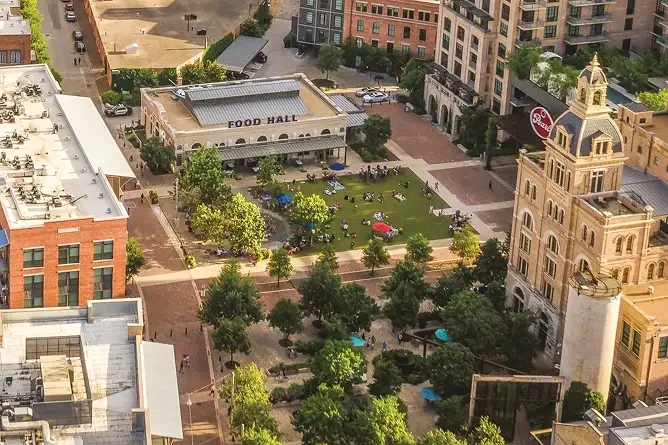
Pearl District Food Hall, San Antonio, Texas
San Antonio’s Pearl District: Strategy in Practice
San Antonio’s Pearl District offers a useful point of reference. Located within a city already anchored by the world famous ‘River Walk’ and heritage tourism around the Alamo, the former Pearl Brewery has been repositioned as a mixed-use precinct combining retail, hospitality, cultural programming and residential uses.
The site spans more than seven hectares, yet the experience feels legible and cohesive. Boutique retail sits alongside independent dining concepts that emphasise regional cuisine. Public lawns and plaza spaces support informal gathering, while heritage buildings have been adaptively reused to retain a sense of continuity. More than twenty hospitality venues operate across the precinct, ranging from casual formats to destination dining.
What is notable is not simply the quantity of venues, but their distribution. Hospitality is woven through the site rather than isolated in a single cluster. Interfaces between indoor and outdoor space are deliberate. Circulation paths intersect with dining terraces and cafes, encouraging pause without impeding movement. Food underpins the daily life of the precinct, reinforcing its identity without overwhelming it.
This outcome is rarely accidental. It reflects planning decisions made when the masterplan was still malleable, and when the integration of hospitality could influence the spatial logic of the development.
The Point of Maximum Influence
The early stages of masterplanning represent the point of maximum influence. Decisions around massing, ground plane activation, access, servicing corridors and public realm configuration establish the parameters within which future operators will trade.
At this stage, F&B strategy can inform questions such as appropriate scale, quantum, mix and clustering logic. It can test how venues relate to anchor uses, transport nodes and residential catchments. It can assess back of house requirements, waste management routes, efficient pathways that work with the structural constraints of the design.
When hospitality is instead introduced after major architectural decisions have been made, its role becomes reactive. Spatial compromises can limit flexibility, restrict operator interest and ultimately constrain performance. Strategic planning at the outset avoids this tension by treating F&B as core infrastructure within the development blueprint.
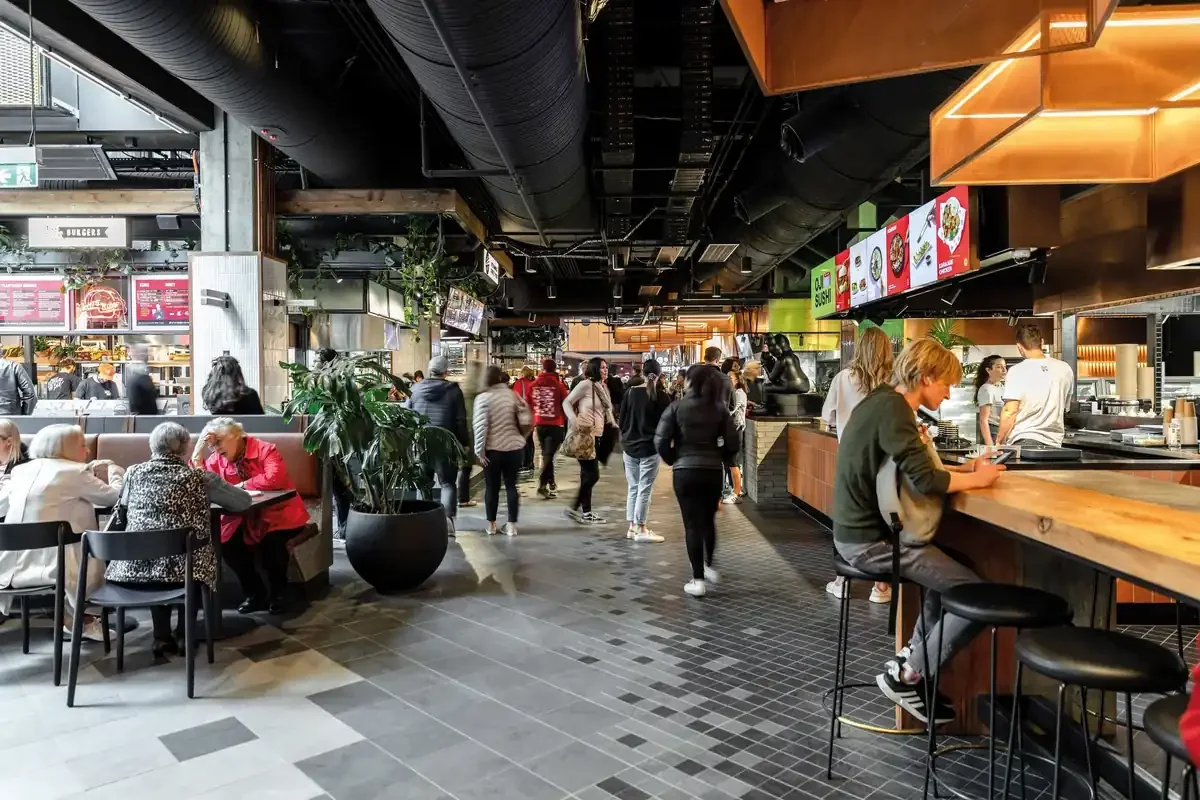
Harbour Eats at Commercial Bay, Auckland. Image credit Precinct Properties
The Planned Vision for Commercial Bay
The masterplanning of the Commercial Bay retail precinct in Auckland was driven by a vision to create a vibrant, city-shaping destination, rather than a traditional shopping centre. Central to this vision was a highly strategic food and hospitality framework that anchored the three-level precinct with more than 40 F&B concepts. From the outset, hospitality was not treated as an adjunct to retail, but as the primary driver of visitation, dwell time, and identity. Careful curation of operators spanning premium dining, fast-casual, local heroes, and experiential concepts ensures diversity across dayparts and demographics. The planning leveraged Auckland’s waterfront location and CBD context, positioning the precinct as a social and culinary hub that responds to office workers, residents, and visitors alike. Rarely does F&B thrive on upper levels of malls, yet here vertical circulation was intentionally designed to support discovery, supported by strong visual connections, escalator placements, and destination anchors that pull customers upward with purpose.
A defining move in the master plan was the activation of edges and the carving of internal laneways that promote permeability and exploration. Activated frontages along key pedestrian routes blur the threshold between city and asset, drawing foot traffic inward and reinforcing Commercial Bay as an extension of Auckland’s urban fabric. Internally, laneways break down scale and introduce moments of surprise, creating a fine-grain hospitality experience reminiscent of successful urban dining quarters. These connective spaces encourage movement in and through the precinct rather than trapping visitors on a single level, strengthening trade across all floors. Underpinned by strong design leadership and a deep understanding of its target audience’s aspirations, the development successfully redefined the role of F&B in retail environments. The result is a precinct where upper-level hospitality not only survives, it thrives – a rare outcome achieved through deliberate planning, curated tenancy mix, and a commitment to placemaking excellence.
Structuring Urban Rhythm
Cities operate according to rhythm. Morning commuter flows differ from weekend leisure patterns. Office workers generate lunchtime peaks, while residential populations activate evenings and weekends. Effective F&B planning responds to these temporal variations.
Masterplanning provides the opportunity to distribute hospitality in a way that supports sustained activation. Quick service formats may align with transport nodes and workplace clusters. Casual dining may sit adjacent to public squares designed for lingering. Evening led venues may be positioned to mitigate noise impacts while supporting evening economy objectives.
This distribution is not solely about convenience. It affects how long people remain within a precinct and how frequently they return. A balanced mix of formats and price points broadens appeal across demographic groups and dayparts. By understanding the interplay between movement patterns and consumption habits, developers can reduce reliance on single peak periods and encourage more consistent footfall.
Such decisions are spatial as much as commercial. They depend on sightlines, permeability, sun exposure, shelter and adjacency to complementary uses. Early integration ensures these variables are considered holistically rather than retro-fitted.
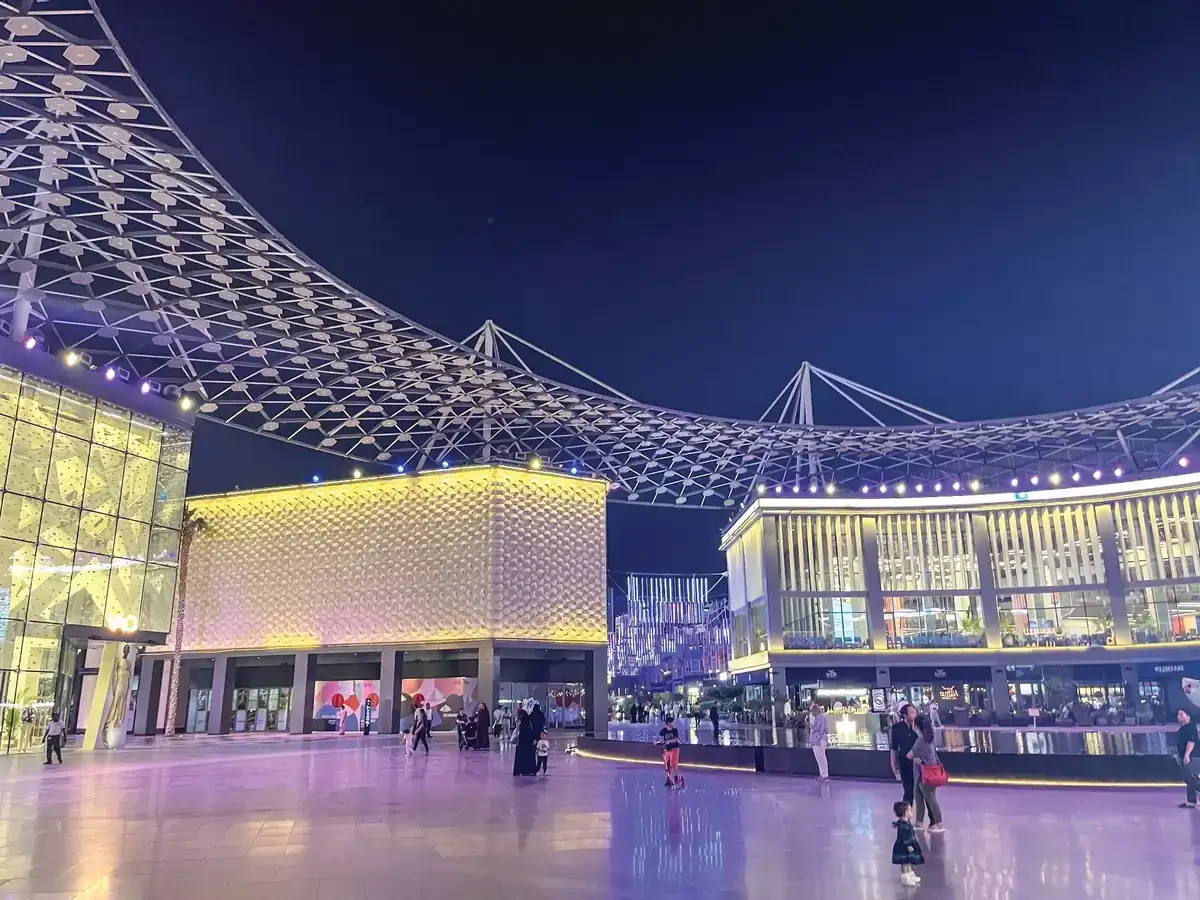
City Walk, Dubai
Identity as a Strategic Asset
Hospitality is one of the most visible expressions of place identity. The mix of cuisines, service styles and price brackets signals whether a precinct is oriented towards residents, tourists, office workers or a combination of all three. It communicates inclusivity, cultural reference and aspiration.
At Pearl, the emphasis on regional Texan cuisine reinforces local narrative. Independent operators contribute character, while adaptive reuse of industrial buildings anchors the experience in history. The result is a precinct that feels specific rather than generic.
For developers, this alignment between F&B and place narrative is strategic. In competitive markets, distinct identity can support rental premiums and strengthen long term positioning. However, authenticity cannot be applied superficially. It requires early clarity around target audience and community, in turn requiring the alignment of all stakeholders on a collective vision.
This approach enables hospitality to support the broader placemaking framework. It allows decisions about operator mix, tenancy size and public realm interface to reflect a coherent narrative. Over time, this coherence contributes to brand equity at asset level.
City Walk, Dubai: a curated placemaking experience supported by food & hospitality
City Walk in Dubai is conceived as a deliberately walkable urban district, designed to prioritise human movement, visual comfort and intuitive discovery. The masterplanning places equal emphasis on architecture, landscape and streetscape, ensuring that pedestrians experience a coherent and engaging environment rather than a sequence of isolated venues. Carefully controlled sight lines frame vistas along the streets, drawing visitors forward and encouraging exploration, while building heights and setbacks maintain a distinctly human scale that feels considered and accessible in the context of the wider city.
The food and beverage offering is curated with precision, forming an active streetscape that evolves naturally throughout the day. Morning sees the area come alive with cafés and casual meeting spots that support business conversations over coffee, seamlessly transitioning into lunch destinations that cater to both professionals and residents. As daylight fades, the mix shifts again, with restaurants, lounges and social priorities taking prominence, reflecting the customary rhythm, where evenings are social, animated and outward facing. This layering allows City Walk to remain relevant and vibrant across the whole day without feeling forced.
What distinguishes City Walk is its sense of discovery and balance. The layout encourages wandering rather than rushing, with subtle variations in frontage, planting and scale that reward those who slow down and engage with their surroundings. Independent operators sit comfortably alongside established brands, creating a blend that feels both familiar and surprising. The result is an urban environment that feels lived in, where people are invited to connect and return, reinforcing City Walk’s role as a thoughtfully executed, pedestrian-led destination within Dubai’s evolving urban fabric.

Pearl District, San Antonio, Texas
Translating Strategy into Implementation
Strategic F&B planning typically progresses through structured stages. These include clarifying development vision, assessing market demand, analysing competitive context, defining appropriate scale and mix, integrating requirements into schematic design, testing financial assumptions and engaging with potential operators.
The discipline lies in maintaining alignment between strategy and delivery. Design iterations must reflect operational logic. Commercial modelling must remain grounded in market realities. Stakeholder engagement should inform positioning. Crucially, this process occurs before leasing campaigns begin. By the time marketing materials are produced, the essential foundations for successful hospitality should already be established.
A Foundational Approach
The consistent lesson is that long term performance is rarely secured through post-completion activation alone. When F&B is treated as foundational rather than decorative, it shapes how a development functions from day one. It informs design decisions, supports feasibility, strengthens identity and enhances social outcomes. Most importantly, it embeds commercial sustainability within the blueprint rather than relying on corrective measures after delivery.
For developers navigating increasingly complex stakeholder environments and heightened scrutiny, this integrated approach offers clarity. Strategic F&B planning is not an embellishment. It is a mechanism for aligning human behaviour, operational practicality and economic performance within a coherent framework.
As featured in Shopping Centre News Aus/NZ, 2026 Big Guns edition.