

Food Matters
Stay ahead in the food and hospitality industry with Future Food Blog. Get the latest news, trends, insights, and expert analysis on food innovations, restaurant strategies, sustainability, and more. Discover what’s shaping the future of dining, food technology, and hospitality with expert commentary and in-depth articles.
Subscribe to Food Matters

Five Food & Hospitality Trends for a Post-Lockdown World
Prior to the pandemic, many people predicted food trends such as a rising interest in meat alternatives, low or no-alcohol beverages and sustainability-driven purchasing behaviours amongst many others. In a little under six months, the entire industry has been tipped on its head due to COVID-19.
The pandemic has been a catalyst for change in the food and hospitality industry. For many it has been a tremendously difficult period, however we are starting to emerge from the lockdown period, and tentatively look towards the future.

Modern Elevated Standards of Campus F&B
Enhancing the on-campus experience, with ‘High Street’ quality experiences.
We all may have tried to erase the sordid memories from our consciousness of the types of food and beverage that we were exposed to during our days as University / TAFE students, but have you ever thought that perhaps our modern-day love affair with consuming all the finest things, may in fact have sprouted from these distant and not so pleasant memories.
The staple diet of two-minute noodles, instant coffee, cheap booze and fast food is synonymous with the psyche of being a University student on a tight budget, with limited resources, time or motivation to boot.
But are these stereotypes fading into oblivion, with priorities of students being reprogrammed with greater expectations relating to modern food and hospitality experiences, akin to what we are seeing more broadly across the industry?

A Bridge Somewhere - Going back to basics
About 23 years ago, comedians Rob Stitch and Tom Gleisner produced and starred in A River Somewhere, a brilliant series about fly-fishing – a passion that both of them shared. All told, they went to thirteen locations around the world to, “catch dinner and have it cooked in a local style.” Today, as we seek to build a bridge somewhere to a place that is virus-free, hospitality is being forced to revert to the simplicity that Rob and Tom sought.
This new period we are in has brought about a lot of very thoughtful introspection about the new normal. These actually provide us with a roadmap as to where this bridge might lead us. We present two perspectives that complement each other well.

Eating with Your Eyes – Food, Design and Social Media
We live in a digital era where we are all critics. Social media and the Internet, in general, drive our ability to offload our opinions on every element in our lives. Food is a major part of this because our exposure to food globally has dramatically changed. We can view the latest trends from around the world while sitting on our couches. All businesses, but especially F&B operators, need to adapt to this new normal and recognise that their presence cannot just be confined to within their four walls.
Use social media but use it tastefully. The key to remember is that the online personality of your business has to match both the in-store experience and the profile of your customers. Use digital communications to draw customers in and then deliver the best. Represent who you are and what you have to deliver. Above all, be genuine and be real.

Did you know there is a sustainable volume of food and hospitality revenue for every project?
Determining a hospitality strategy that maximises food and hospitality revenue is the goal that many of our clients wish to resolve when they partner with Future Food. However, in order to do that we must first understand the size of the project’s food and hospitality revenue potential and then the important part – aligning that available spending with the need states and aspirations of their target market(s) in order to maximise the potential for the project.

Improving the Sustainability of Your Restaurant During Challenging Times
The sustainability of any restaurant or F&B business is always dependant on meeting the needs of the intended target market and remaining relevant to those customer segments with authentic food and a range of promotions, offers and experiences that encourage repeat patronage. Although COVID-19 virus is extreme business interruption and thankfully not an everyday event, it does demonstrate how an external event can devastate a business or sector of hospitality reliant on a narrow target market focus. The everyday trading lesson is for restauranteurs and F&B operators to boost the sustainability of the business with active, customised and well communicated promotions, offers and experiences, expanding the target market base to create a more sustainable revenue base.

Vegan & Vegetarian meat substitutes and the potential health risks of these food types
Generally speaking, vegetarian and vegan lifestyles can be extremely healthy when eating a plant-based diet full of wholefoods, fruits, vegetables, grains, nuts, legumes etc. Recently, however, there has been an influx of a wide variety of new vegan and vegetarian processed products that do not provide consumers with all of the health benefits you might expect from adhering to a meat-free diet. It is important to ensure that you read the back of the package to really understand what is packed into these faux meat processed foods that may negatively impact on consumer’s health.

Great Service in an Era of Labour Costs and Technology
Will Guidara, one of the owners of Eleven Madison Avenue in New York, has been quoted as saying that it’s “compassion and passion [that] gives a fantastic dining experience.”
As every successful restaurateur will tell you, passion is the reason that they started their venture in the first place. It’s what continues to drive their activities. But passion alone can only take you so far.
Jay Rayner, the UK food critic, has recently written that he, “does not regard the table primarily as a place of nutrition. That’s just something which, happily, comes with the territory. It’s a place of joy.”

The Future of Food is Exciting - Food and Hospitality Trends of 2020
Trends that will shape the future of your food and hospitality projects for 2020.
Trends are no longer limited to the cuisines on offer or the style of service. The ‘whole experience’ is what matters. Customers have feelings, opinions and are savvy when it comes to choosing where to spend their money. However, food and service will always be at the heart of hospitality.

Growth Strategies for Food and Beverage Clusters
When Future Food partners with our Clients on redevelopment projects, one of the first stages that we frequently perform is the evaluation of a proposed scheme and how F&B should be incorporated into it. Most frequently this is driven by the architectural scheme and the locating of F&B into the scheme, frequently with non-food priorities and considerations as the backdrop for the decision-making process.
However, F&B has its own set of “built in” priorities and as such adopting a scheme-driven approach frequently demonstrates a recurring set of issues.
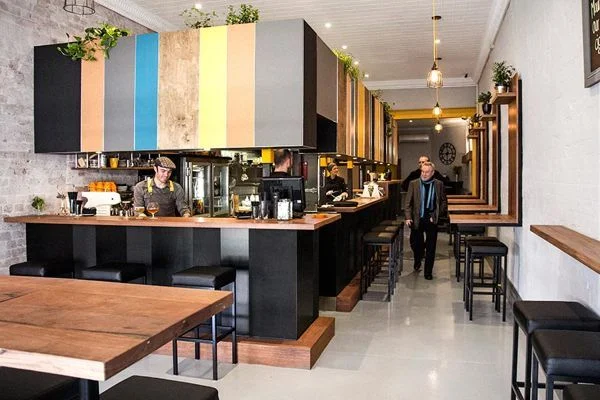
Realities: An insider’s view of running a small “hospo” business
We, at Future Food, are employed to deliver best practice food and beverage service standards and to ensure that all businesses we work with are striving to push the bar higher.
However, we also understand the challenges that small businesses are facing in the current landscape and we take a lot of this into consideration when setting realistic expectations and goals for our clients. Our aim with this blog post is to provide an insider’s view of the realities of ‘living the hospitality dream’.

The Overlooked Market - Why we should capitalise on business spending
Have you ever looked at a menu, or a wine list, and wondered who in their right mind would order that? Who orders the $300 steak? How many bottles of $750 champagne do they sell? You must have to be on an expense account to order that.