
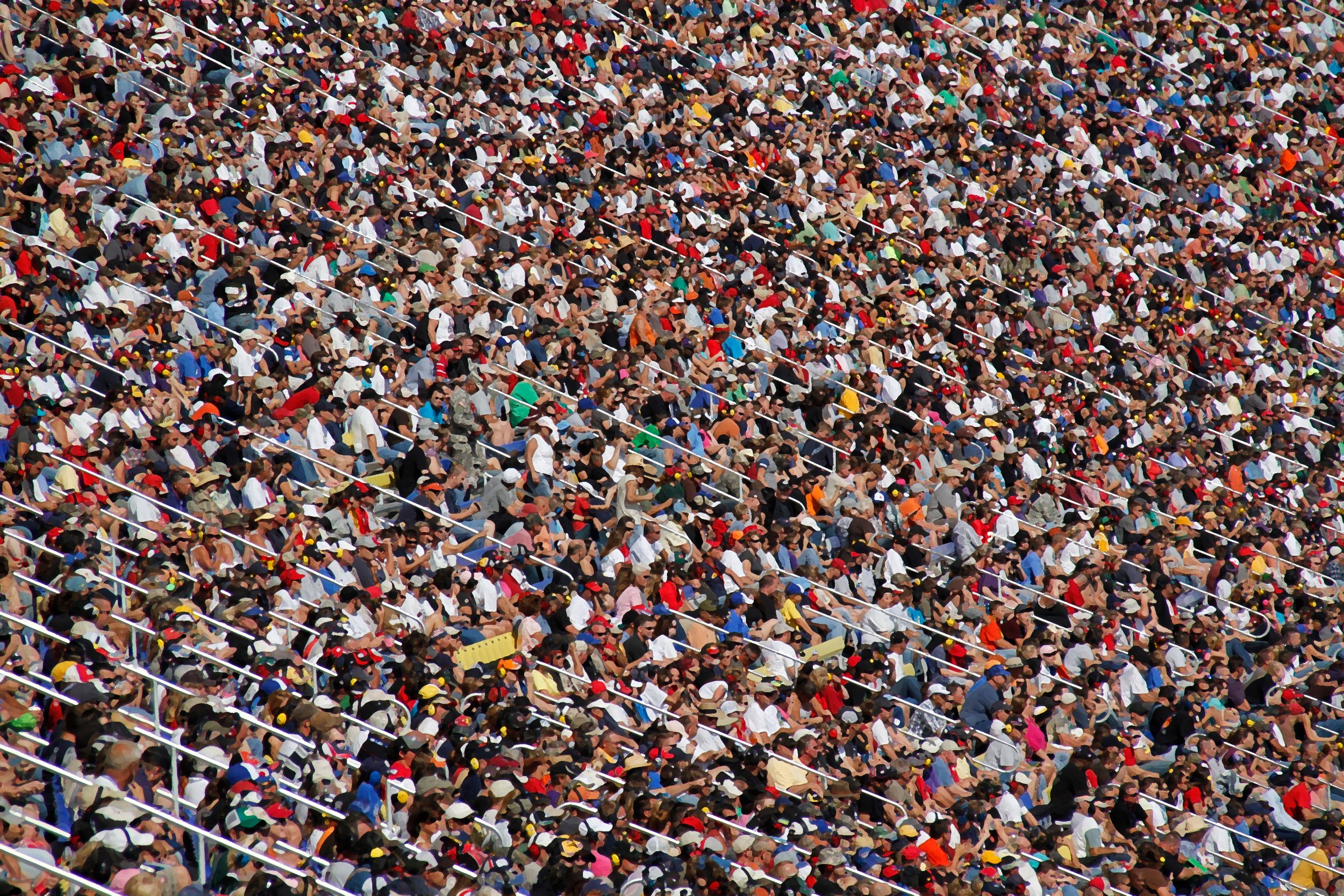
Australian stadia have been on a steady path of physical rejuvenation, accompanied by a corresponding uplift and diversification of food, beverage and hospitality experiences. Stadia Management and operators are now redesigning the stadium experience itself to meet contemporary expectations for choice, comfort, convenience, social connection and hospitality across multiple modes of use. Food and beverage is at the centre of this shift, moving from a supporting event-day service to a defining part of the venue experience.
For many years, the operating model was relatively straightforward: move large crowds through the gates, serve familiar food and beer quickly, preserve established member traditions and provide corporate boxes for commercial partners. Those functions remain important, but they no longer capture the full opportunity.
The contemporary stadium must perform as a sporting venue, concert arena, major-event platform, conference destination and year-round community and hospitality asset. Within each mode of use, it must accommodate customers whose expectations range from a fast transaction and a general admission seat through to destination dining, social lounges and highly personalised premium hospitality.
This is changing the way stadia management and operators consider their F&B assets and their contribution to broader community use. The question is no longer how many concessions, bars and function rooms a venue needs – rather – does the overall mix provide a deliberate progression of experiences, support different event profiles and give customers credible reasons to arrive earlier, stay longer and spend more?
One building, multiple modes of use.
The early stages of masterplanning represent the point of maximum influence. Decisions around massing, ground plane activation, access, servicing corridors and public realm configuration establish the parameters within which future operators will trade.
At this stage, F&B strategy can inform questions such as appropriate scale, quantum, mix and clustering logic. It can test how venues relate to anchor uses, transport nodes and residential catchments. It can assess back of house requirements, waste management routes, efficient pathways that work with the structural constraints of the design.
When hospitality is instead introduced after major architectural decisions have been made, its role becomes reactive. Spatial compromises can limit flexibility, restrict operator interest and ultimately constrain performance. Strategic planning at the outset avoids this tension by treating F&B as core infrastructure within the development blueprint.
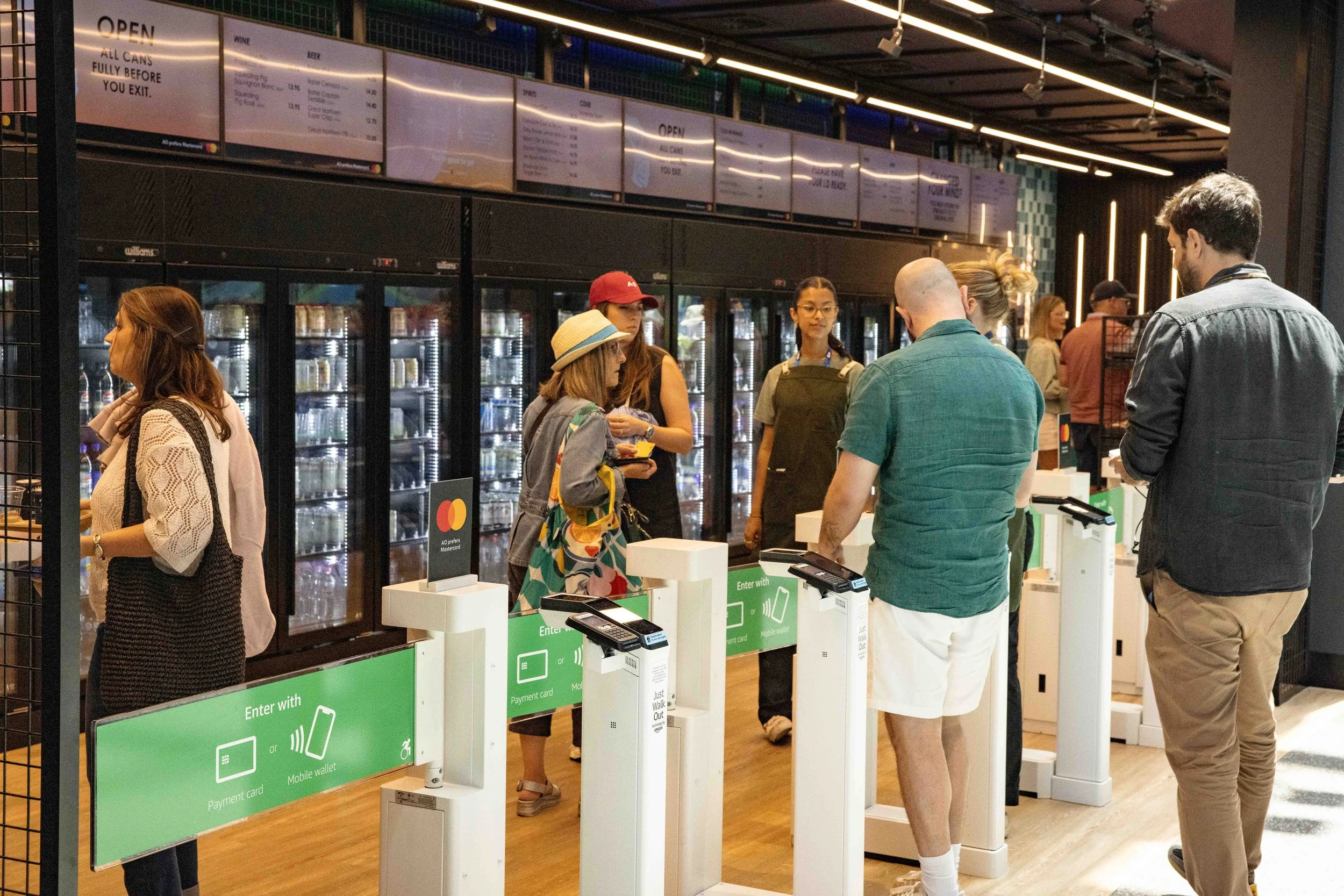
Just Walk Out technology
A broader spectrum of food and beverage experiences.
The traditional concession remains an essential part of the stadium model. High-volume outlets provide familiar products and support rapid transactions during periods of concentrated demand.
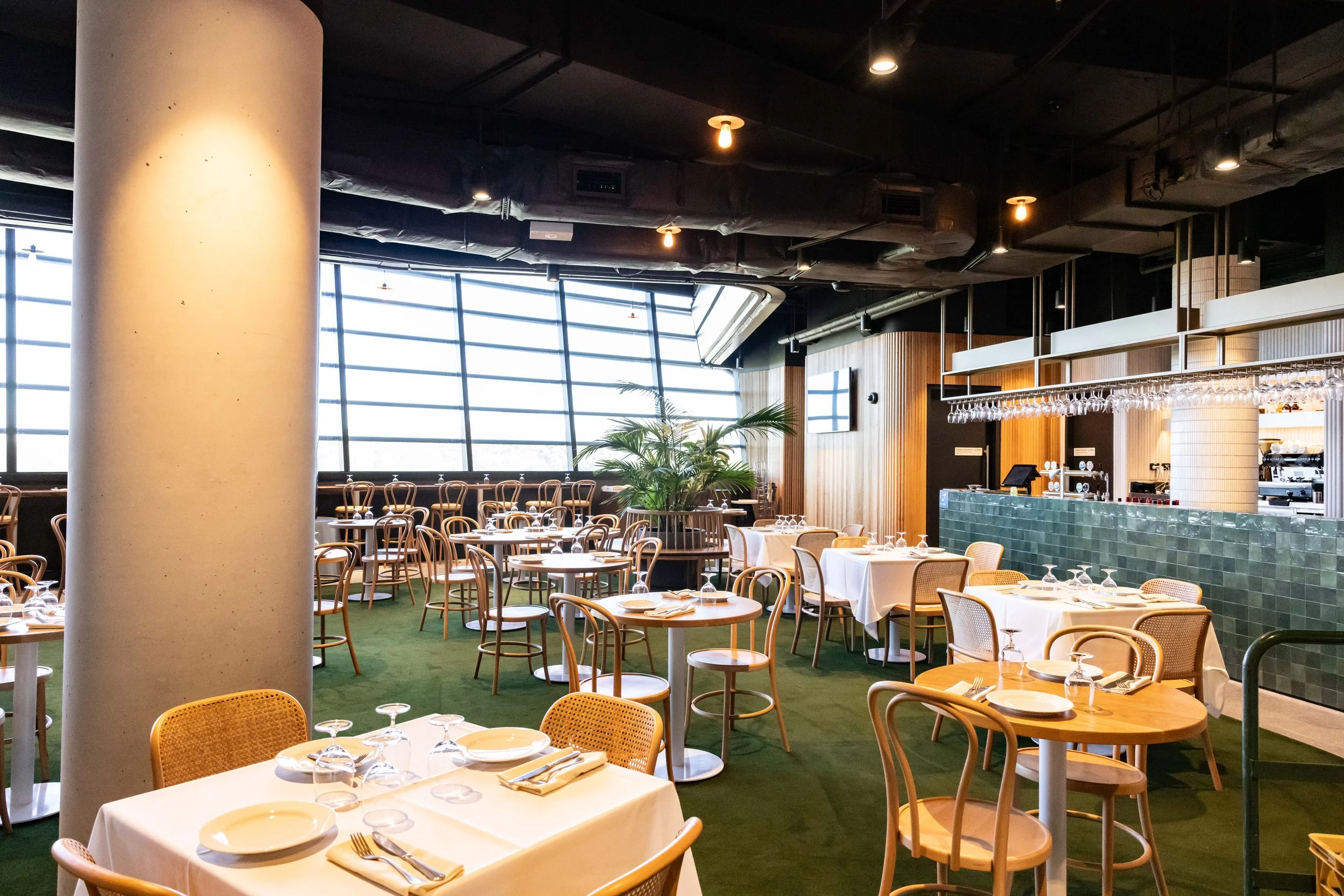
Bert’s Bistro, Allianz Stadium, Sydney
Frictionless beverage formats are becoming a more visible part of this offer, particularly in locations where transaction speed and throughput are paramount. They provide convenience and capacity but serve a different purpose from venues designed for socialising and extended dwell.
Traditional Australian bars continue to have a strong place within the stadium. Their familiarity, social character and connection to sporting culture can be as valuable as a contemporary refurbishment. Design led social bars, exclusive and premium bars round out the choice broadening the stadium experience with varied seating, stronger interior character and a more developed beverage offer.
The food offer is diversifying in a similar way.
External food trucks and temporary activations can add variety and energy to plazas, fan zones and arrival areas. Internal carts and pop-ups can respond to particular locations, customer groups and event types.
Traditional concessions remain the primary source of volume, while branded QSR and fast-casual operators can bring recognition and additional choice. Licensed cafés and restaurants introduce a longer-dwell alternative and may also support non-event-day trading where the location and operating model allow.
At the premium end, member restaurants, exclusive dining rooms and destination-led hospitality spaces provide a stronger sense of occasion and a closer connection between food, design and the event experience.
Choice must remain easy to navigate.
Greater variety does not automatically produce a better customer experience.
Stadium customers make purchasing decisions in a highly compressed environment. Offers need to be visible, understandable and suited to the amount of time available.
Internal food hubs can bring several concepts together and create a stronger sense of activity. They can also provide shared seating and a more contemporary alternative to a continuous line of traditional concessions. Balanced with great design so customers are able to understand the offer quickly, locate the appropriate outlet and complete their purchase without unnecessary complexity.
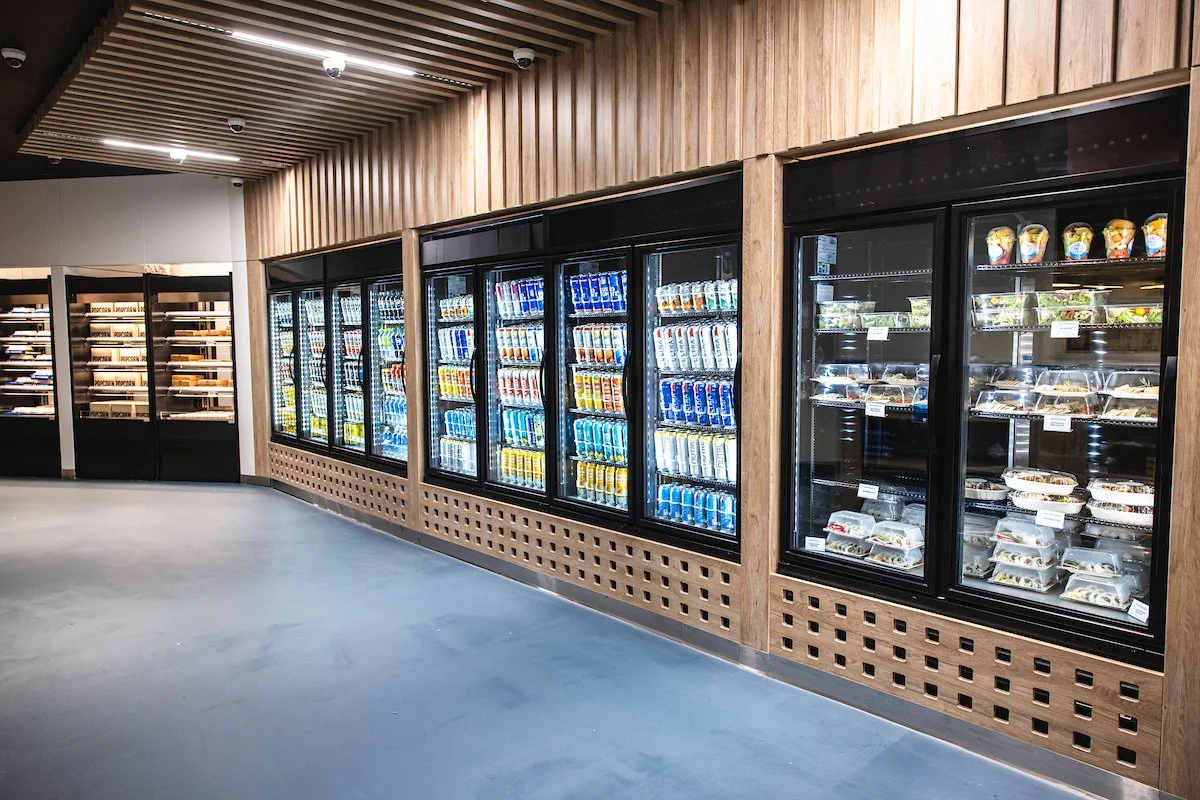
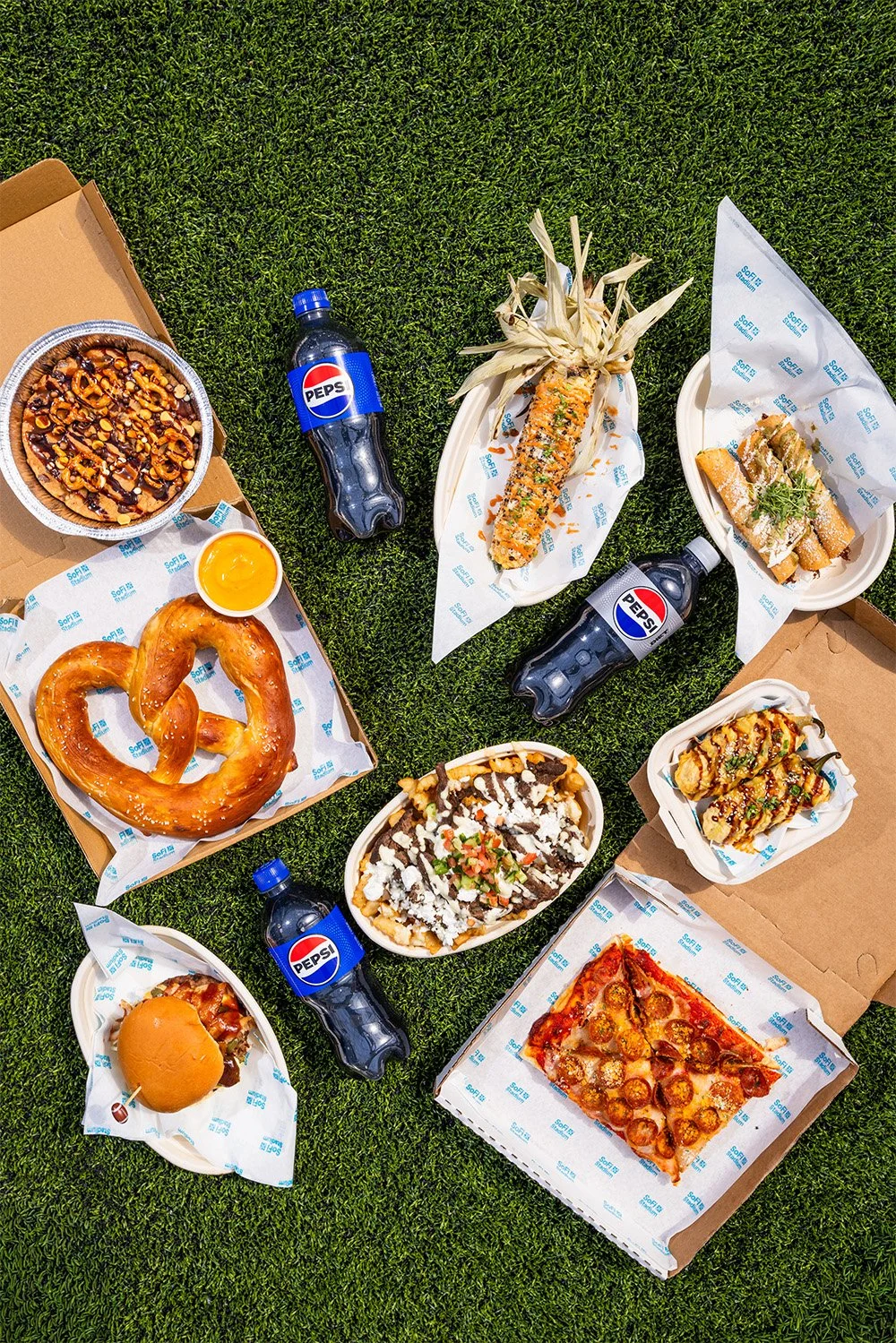
Grab n Go market at Sofi Stadium, Los Angeles. Image credit Jakob Layman
The distinction between grab-and-go and made-to-order food is also becoming more important. Grab-and-go provides speed and certainty. Made-to-order products can offer greater freshness and perceived quality, but patrons will tolerate different waiting times depending on the event and occasion.
Digital service should improve the customer journey.
Digital ordering is now a familiar part of the stadium environment, although its effectiveness depends on how and where it is applied.
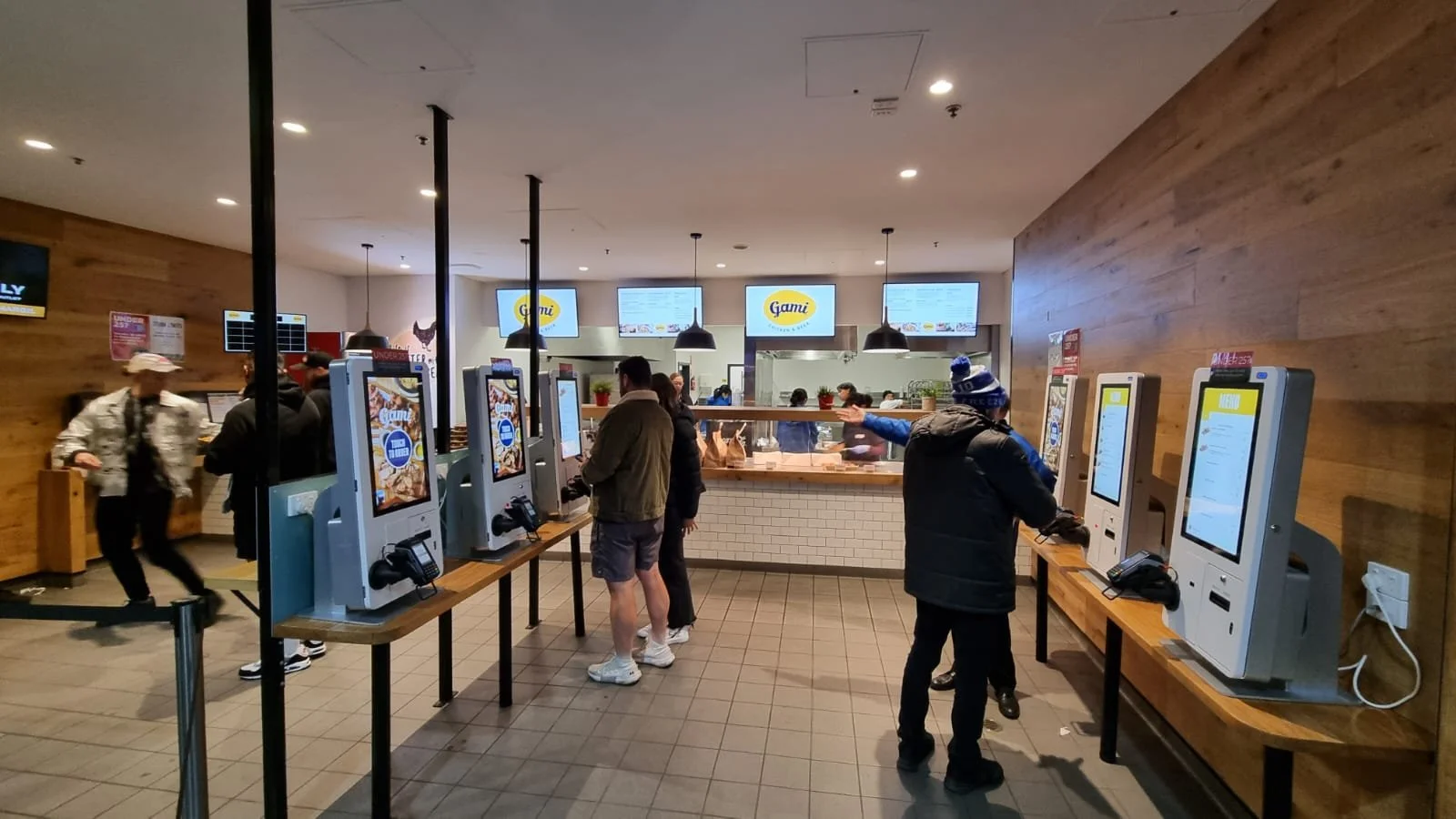
Gami at Marvel Stadium, Melbourne
QR ordering can suit cafés, restaurants, lounges and reserved seating areas where customers have time to dwell. Self-service kiosks can increase ordering capacity and help customers navigate larger menus. Venue and third-party apps can support click-and-collect, express collection and delivery to selected seating areas.
At SoFi Stadium, customers can order through Uber Eats for pickup or delivery, while kiosks, grab-and-go markets and digital dining guides support different purchasing occasions.
The value of technology lies in convenience. Where digital tools add complexity or transfer congestion from one part of the service process to another, the customer benefit quickly diminishes.
Premium hospitality is becoming more varied.
Traditional corporate boxes and formal member functions will remain important parts of Australian stadium hospitality. They support sponsors, business entertaining, club leadership and longstanding traditions.
The fastest area of development is the space between the general admission seat and the private corporate suite.
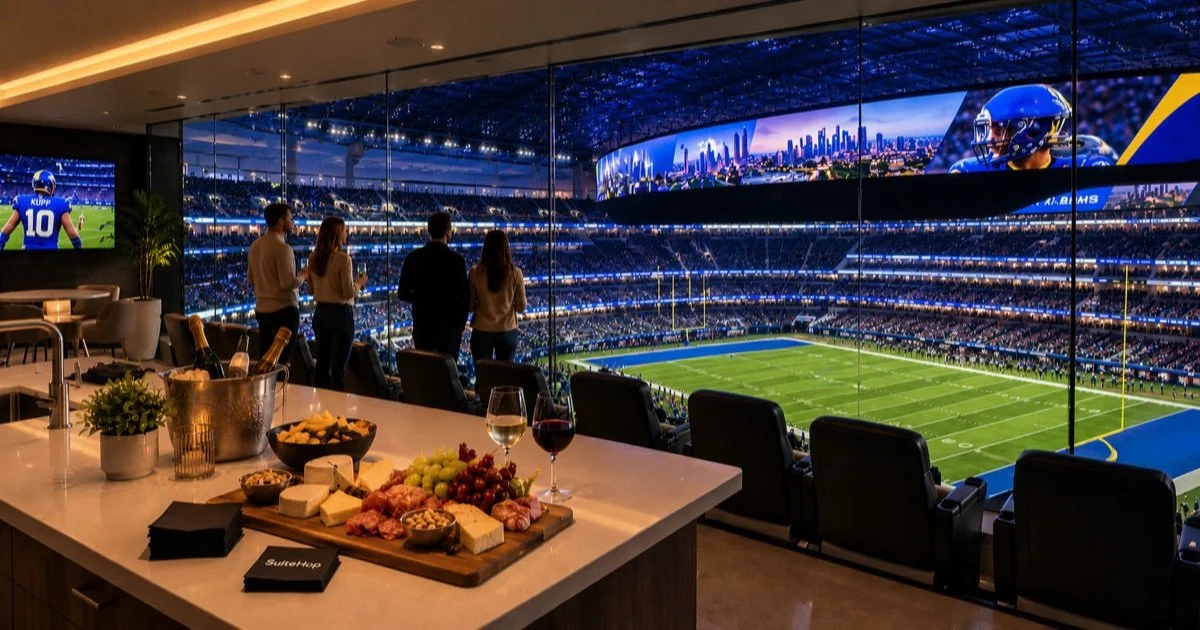
International venues are introducing a wider variety of lounges, clubs, terraces, loges and field-level products. These formats offer improved seating, better hospitality and a more distinctive environment without requiring every customer to purchase a conventional suite.
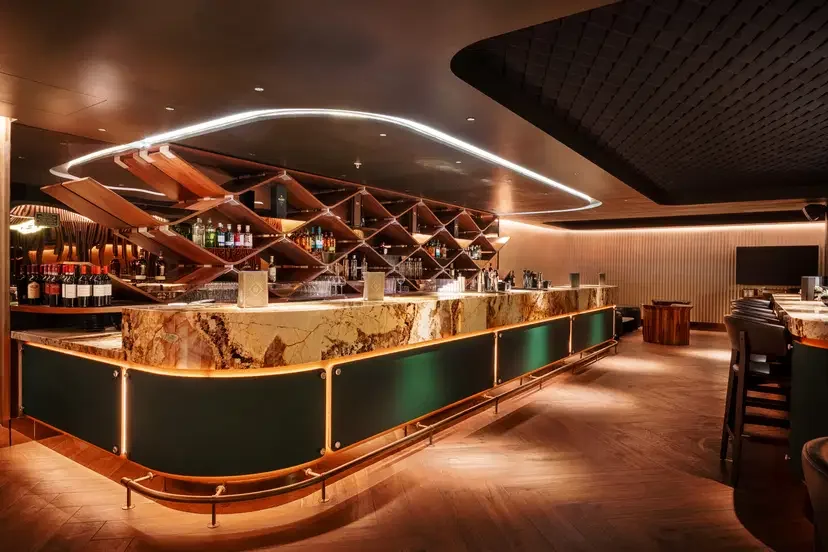
Bentley Record Room, Co-op Live, Manchester
Allegiant Stadium combines traditional suites with smaller premium loges and club suites. These products provide comfortable seating, private amenities, club access and upgraded food and beverage, offering an alternative to the larger corporate suite.
SoFi Stadium demonstrates how premium experiences can be layered throughout a venue. Its Google Cloud Clubs use different culinary themes and luxury finishes, Patio Clubs provide indoor-outdoor hospitality, and field-level clubs create a closer connection to the action. Products such as Field Cabanas, Bungalows and Perch Suites broaden the choice available to different group sizes and customer types.
At the upper end, SoFi’s Bootsy Bellows lounge draws more from Los Angeles nightlife than conventional stadium hospitality. Its distinctive interior, cocktails, dedicated service and made-to-order food illustrate how a strong concept can give a premium venue genuine identity.
Co-op Live in Manchester applies similar thinking to concerts. The Bentley Record Room, Backstage Club and Hideaway each have their own design, food offer and style of entertainment. The Backstage Club draws on Manchester’s Northern Quarter and combines pizza, themed cocktails, arcade games, DJs and post-show activity. Hideaway offers Mediterranean food and live entertainment, while the Bentley Record Room uses automotive-inspired finishes, concierge service and elevated small plates.
These venues are also marketed for launches, networking events, dinners and private functions outside performance times, extending their role beyond the event calendar.
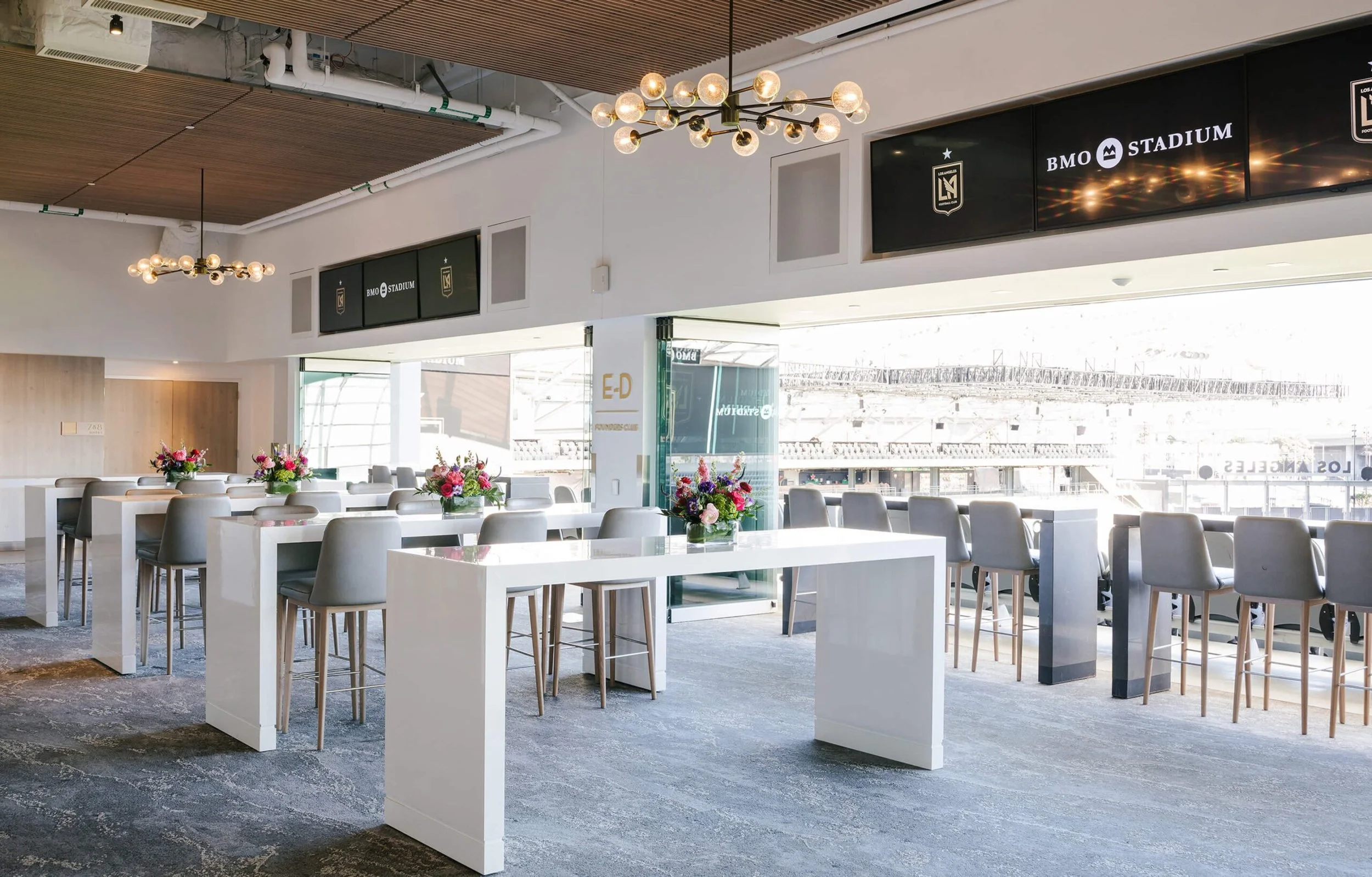
BMO Stadium in Los Angeles positions its premium clubs as distinct social settings. The Founders Club is light and open, with high ceilings and field views, while the Field Club has a darker, Old Hollywood-influenced interior and supports both event-day hospitality and private functions.
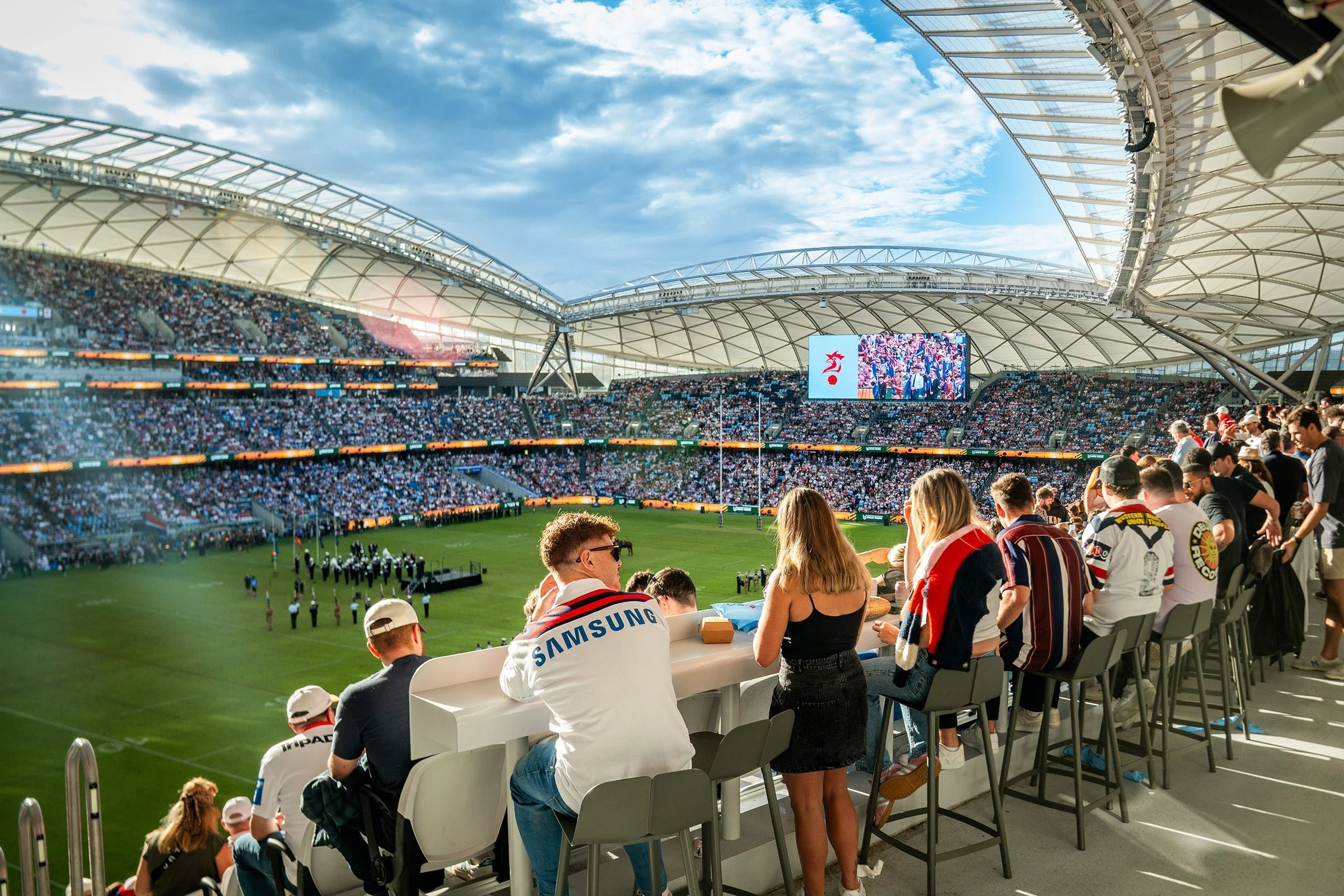
In Australia, the American Express Garden at Allianz Stadium combines pitch views, varied lounge seating, approachable food and beverage and a design-led aesthetic to create a relaxed GA+ environment.

The non-event-day opportunity.
The next generation of stadium development will place greater focus on spaces that can remain useful outside the event calendar.
Cafés and restaurants positioned toward an external plaza or stadia edge can potentially serve venue staff, visitors, nearby workers, residents and function guests. On event days, they form part of the broader stadium offer. On other days, they must operate as credible standalone hospitality businesses.
Premium clubs and lounges can also support conferences, launches, dinners and private events. Their ability to do so depends on the quality of the room, access, amenities, catering capability and overall appeal when the stadium bowl is not full.
Spaces that perform across both event and non-event periods can strengthen the commercial return on assets that would otherwise remain inactive for much of the year.
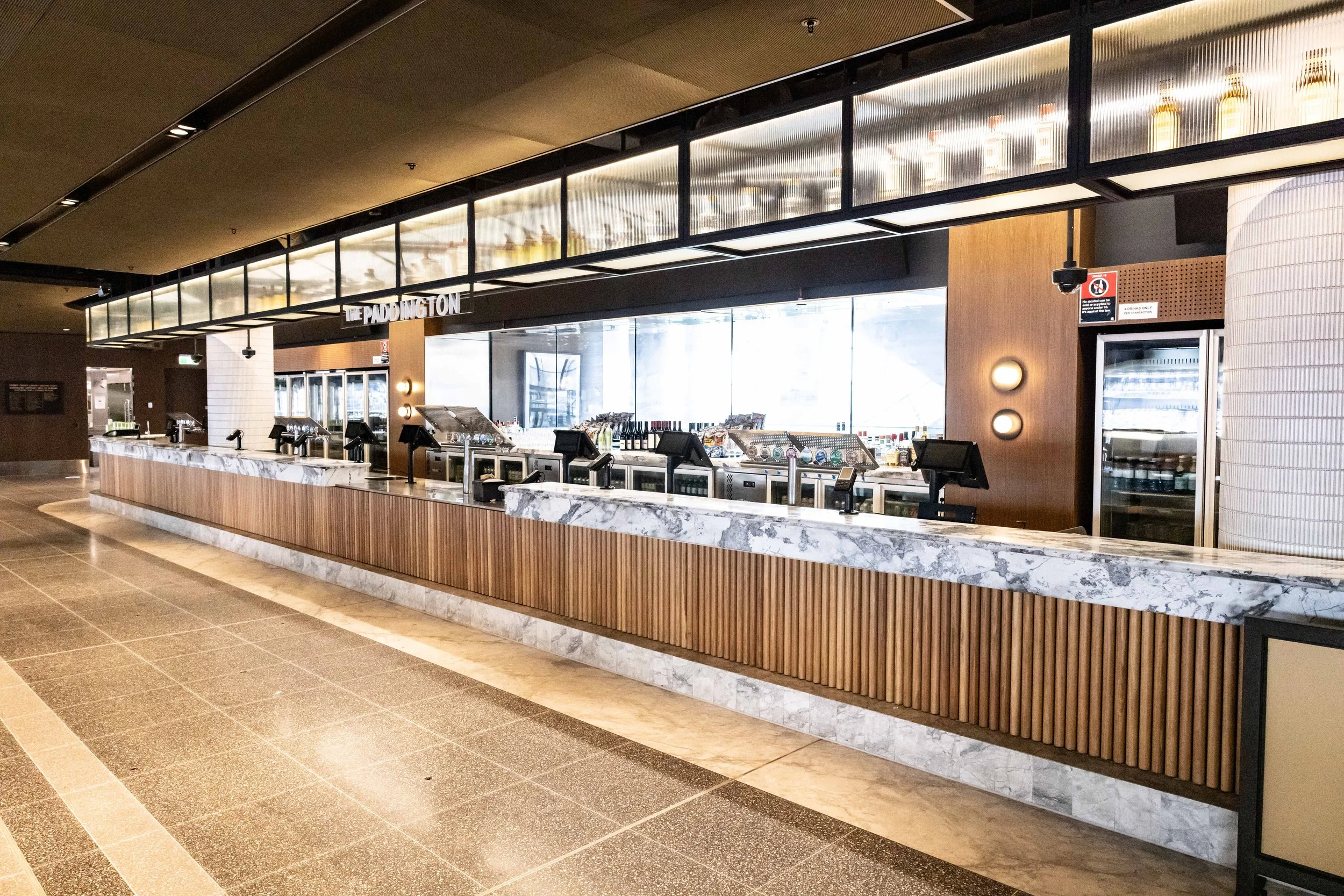
The Paddington, Allianz Stadium, Sydney
The next phase for Australian stadia.
Australian venues do not need to replicate American stadiums or European arenas. Our sporting codes, member structures, event calendars and commercial conditions are different.
The relevant lesson is the growing importance of choice, flexibility and a clear progression of experiences.
Future stadium developments and refurbishments will need to consider how food, beverage and hospitality can respond to different sports, concerts, major events and non-event-day uses. High-volume concessions will remain essential, but they will increasingly sit alongside recognisable brands, cafés, restaurants, social bars, terraces and new forms of premium hospitality.
Australian stadia are moving from a predominantly transactional F&B model toward a more diverse hospitality ecosystem. The venues that respond well will provide better customer choice, stronger reasons to dwell and a more compelling platform for sport, entertainment and year-round activity.