
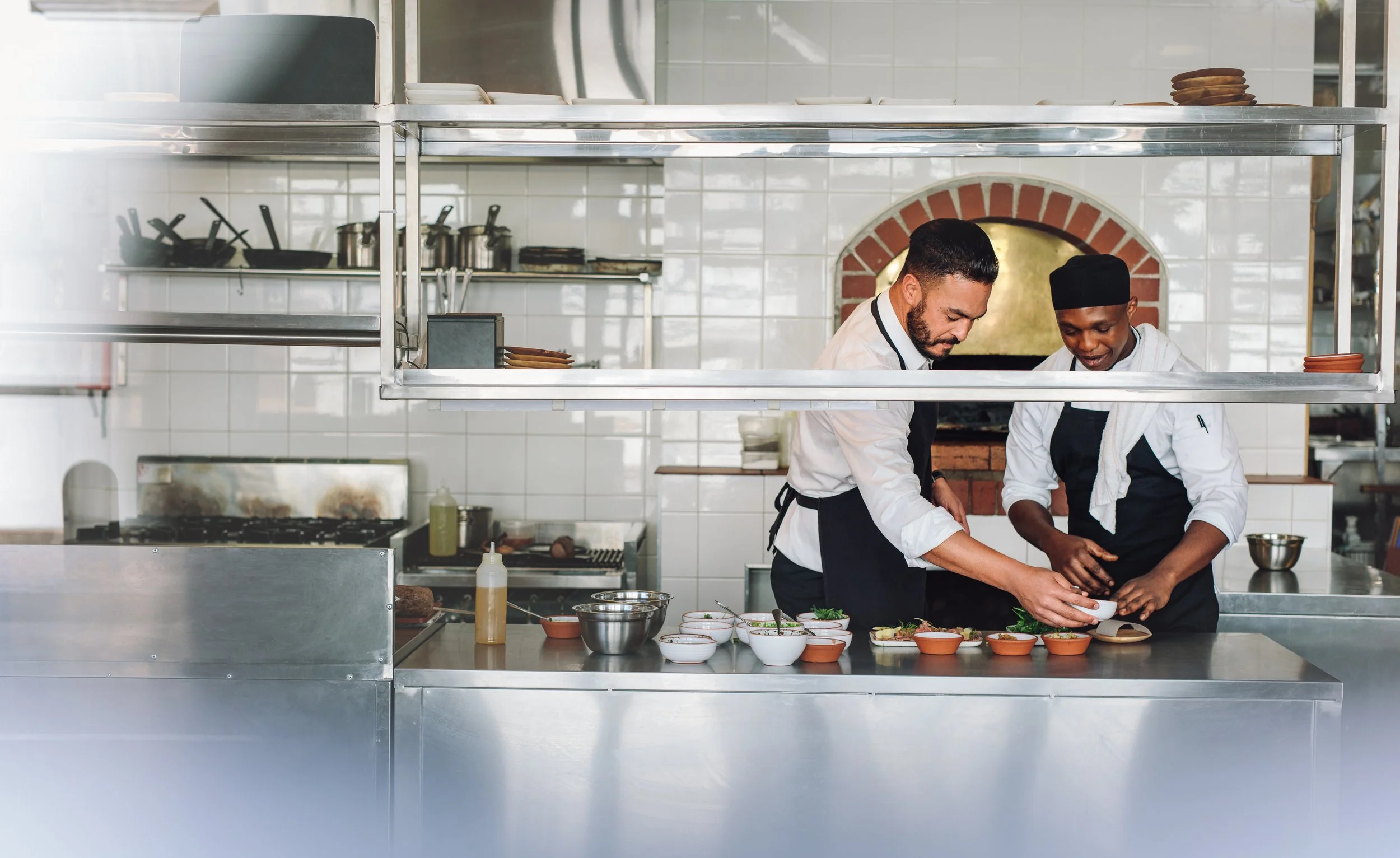
Why the EOI Approach Delivers Better Outcomes
In today’s dynamic food and hospitality landscape, customers have more choices at their fingertips than ever before. The core of any food and hospitality operator procurement process is to meet and preferably exceed the target market (customer segments) expectations and deliver a fit-for-purpose solution. Satisfying those customer needs leads to a greater frequency of uptake (strike rate) and increased average spend, creating a sustainable F&B offer and greater return to tenants and landlords.
Food and hospitality are no longer an afterthought for clubs. Clubs are using Future Food to deliver impactful expression of interest campaigns that align their aspirations with best practice operators’ commercial and operational practices. Top clubs recognise they are a pivotal part of the experience and should not be left to chance through outdated traditional leasing models. We are currently running multiple club EOI campaigns and understand that regardless of the venue – whether it’s a café, a bar, signature restaurant or event space within a club – the quality and relevance of food and beverage offerings can enhance the experience, attract visitation, and strengthen both social and commercial value.
The traditional leasing approach of awarding tenancies to the highest bidder may deliver immediate returns, but it frequently overlooks long-term growth potential, brand alignment and alignment to the target market.
Future Food’s Expression of Interest (EOI) process is a more considered, strategic approach. It begins with deep consultation and not a tender document. We work closely with our clients to uncover the true purpose of the hospitality offer.
Who is the target market? What is the segmentation? How do they spend?
What sort of food experience will meet the target market needs, enhance the space and achieve the project’s commercial and cultural goals?
What is the potential F&B revenue opportunity? Is there more demand in the location (missed opportunity)?
What F&B offer – food, beverage and service – enhances our overall experience and aligns to our goals?
We have spent decades advising both the private and public sectors on how to embed hospitality into their existing and new club precincts, not simply as tenants, but as integral contributors to the identity and success of each place.
Once we have aligned the F&B opportunity with the potential, only then do we move to market; and not to the general market, but to a targeted group of hospitality professionals and businesses whose expertise, vision and track record align with the opportunity. Through the Future Food F&B Operator network, built over hundreds of successful projects, we connect clients with top-tier operators who bring not just a rental return, but genuine value.
Our method works. It has led to partnerships that have reinvigorated club hospitality spaces and delivered benchmark hospitality outcomes. It allows our clients to be curators, not just landlords – shaping the kind of hospitality that reflects the values of their club, serves their audience, and stands the test of time.
Get in touch with our specialist club consultant Allan Forsdick
Phone +61 (3) 9646 5177
Mobile +61 401 557 760
Email aforsdick@futurefood.com.au

F&B Case Study
Vikings Clubs | NSW & ACT
F&B Case Study: Vikings Clubs, ACT/NSW
In 2023, Future Food was commissioned by Vikings Clubs to conduct a comprehensive review and provide strategic guidance for their existing six club locations and two forthcoming developments. The primary objective was to formulate a diversified hospitality strategy aimed at securing the Club’s position as the leading Food and Beverage (F&B) provider in the region. This strategy aimed to ensure a sustainable F&B business model, considering the evolving economic landscape, which is progressively less reliant on revenue from gaming and Electronic Gaming Machines (EGM). Our proactive engagement with this forward-thinking organization involved an on-site hospitality review and a stakeholder engagement session.
Following the completion of this initial strategy, aligned with a thorough analysis of key competitors, Future Food presented Vikings with a diversification strategy. Future Food provided the Vikings Clubs with benchmark operating costs and recommended performance standards. These standards could be incorporated into the Key Performance Indicator (KPI) structures of senior club managers, thereby incentivising best practice performance.
Images courtesy of Vikings Group/Ben Calvert

F&B Case Study
Albert Park Yachting & Angling Club
F&B Case Study: Albert Park Yachting & Angling Club, Melbourne
Future Food worked with the Albert Park Yachting & Angling Club (APYAC) to develop an operator strategy, business feasibility and operational direction for the Club. Subsequent to this, we developed and actioned a campaign to identify and source top tier operators aligned to the club's aspirations and exclusive members only charter.
Working collaboratively with the Club, we produced a comprehensive feasibility study that considered Kitchen and Bar operations, Events and Functions, competitor pricing and positioning strategies. We developed a series of realistic and implementable strategies that delivered best ROI for the Club and a positive business case for prospective catering partners. In August 2024 we took the opportunity to market and secured a top Melbourne chef to deliver the strategies.

F&B Case Study
Altona RSL
F&B Case Study: Altona RSL, Melbourne
In August 2025, Future Food was engaged to manage an expression of interest campaign for Altona RSL, aimed at identifying and attracting high-quality food and beverage operators to revitalise the Club’s dining offer. The campaign targeted a broad range of operators, with 74 local and national businesses proactively approached and over 3000 direct communications sent to generate engagement.
Future Food’s role extended beyond submission collection, providing coaching and guidance to ensure smaller operators could present their concepts credibly alongside more established applicants. This support maintained fairness and surfaced innovative ideas that may have otherwise been overlooked.
The outcome was a refined shortlist of capable and creative operators, giving Altona RSL a clear, evidence-based pathway to selecting a catering partner. The campaign demonstrated how structured market engagement, supported by targeted outreach and operator guidance, can effectively uncover both proven performers and fresh concepts to revitalise a Club’s hospitality offer.
Future Food’s approach is not about sacrificing commercial outcomes in favour of aesthetics or ideals. Quite the opposite. Our clients are seeing better, long-term financial returns, greater customer satisfaction, stronger brand alignment and a reduced risk profile, because the right operator in the right space, with the right support, performs.
For clubs in particular – where hospitality is deeply connected to visitor experience – community engagement and public value, the EOI process is not just a better option. It’s best practice.
At Future Food, we welcome the opportunity to explore how our collaborative, insight-led approach can unlock the full potential of your project. We know a hospitality strategy built on our EOI process, insight and expertise, will always outperform an outdated leasing transaction based on rental return.
Subscribe to Food Matters
-
![Logo of Albert Park Yachting & Angling Club Inc., featuring a black fish on a pink and blue oval background with the text 'Established 1909'.]()
“I can't thank Allan and Future Food enough for their work on this project. Super professional, they provided us with some incredible opportunities - each perfect for the role in their own way – but when it comes down to it, it's ALL about the Members, and the Club's legacy that we have been charged with nurturing. Even then Allan was there helping us right to the end. A class act.”
James Nixon, Club Secretary
Albert Park Yachting & Angling Club, Melbourne -
![Vikings Group logo featuring a red Viking helmet and text]()
“Future Food’s expertise in developing a tailored food and beverage strategy for Vikings Group has been instrumental in our success. Future Food has proven to be a valuable partner, dedicated to delivering exceptional service and results. Their commitment to understanding our unique requirements and delivering tailored solutions has made a significant difference in our business. I highly recommend Future Food to any organisation seeking to elevate their food and beverage offerings and drive sustainable growth.”
Ron Kent, General Manager
Vikings Group -
![Southport Sharks logo]()
”Team members responded really well to Allan's session on providing sensational service. He was able to provide clear, real examples of their service levels from the 'mystery shop' he previously conducted in our venue. The content of his presentation was excellent. Whilst it was tailored to suit our needs, he also weaved current customer expectations into the presentation, along with practical service anticipation tips.”
Ann-Marie O'Neill, HR Manager, Southport Sharks QLD
-
![Kedron Wavell Services Club logo]()
”Overall, it's a fantastic report with a constructive assessment on the current situation and some sound insight into the future. I know the board will love the document!”
Lyndon Broome, General Manager
Kedron-Wavell Services Club